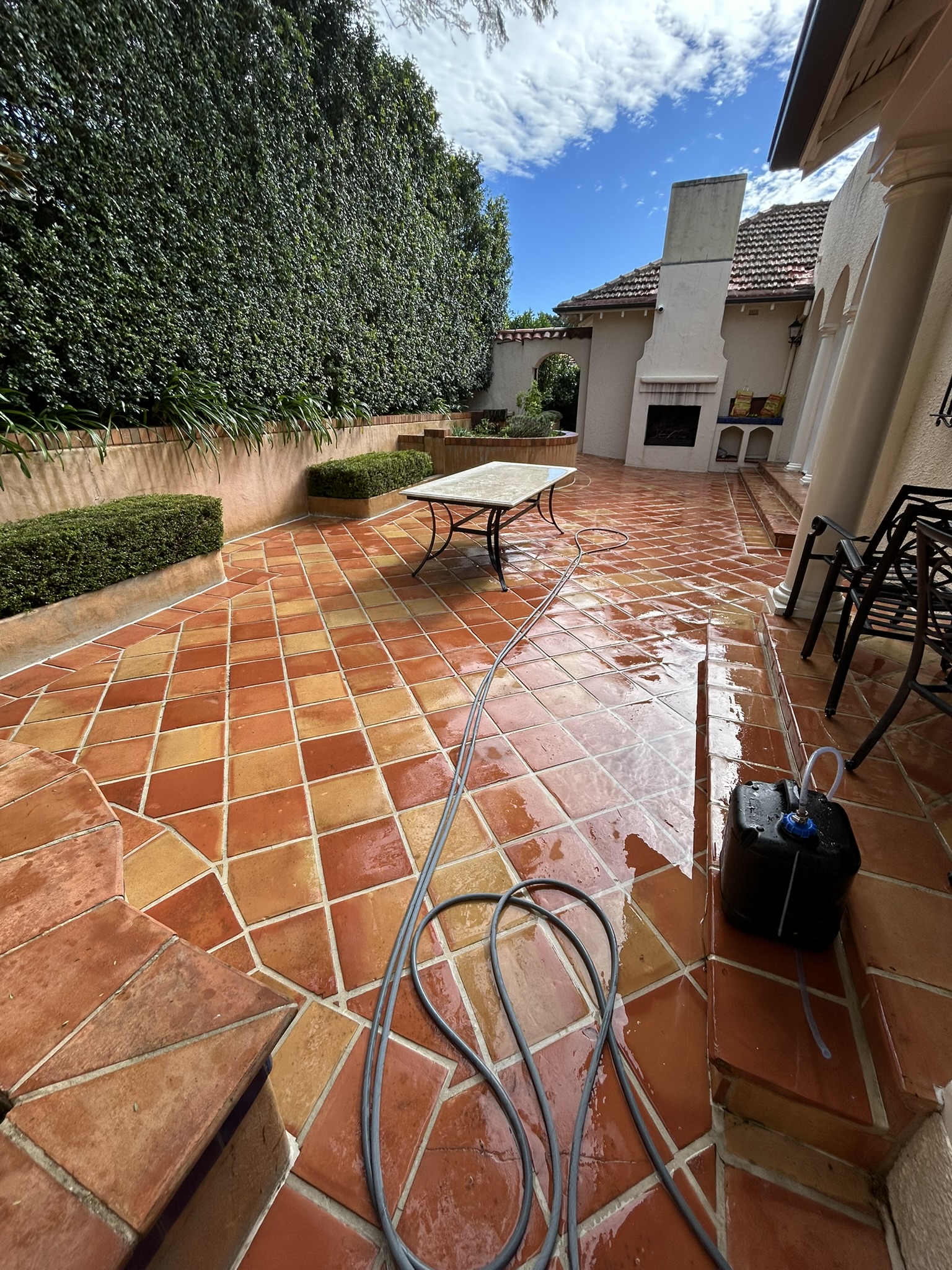
Narrow blocks, tight side setbacks and nowhere to put the gear. Camp Hill and the older inner suburbs are full of these, and we work in them constantly — which is the only reason access here is routine rather than a problem.
Camp Hill is hills and narrow allotments. A lot of the blocks are a fraction under the old standard width, the houses have been extended sideways over the years, and what is left between the wall and the fence is often less than a metre. That single fact drives everything about how a job here is priced and run.
It means hoses have to be run further from where the trailer can legally park. It means we sometimes cannot get the surface cleaner down the side at all and the path has to be done by hand with a lance, which is slower. It means ladder placement on a steep block takes planning rather than guesswork. None of that is a reason not to do the work — it is just the reason a Camp Hill quote can sit higher than the same size house on a flat Sunnybank block, and we would rather explain that than quietly pad the number.
Neighbours are close, which matters more than people expect. Overspray, run-off and chemical drift all have to be controlled when the next house is three metres away and their windows are open. We cover, we contain and we rinse, and we will knock on a door if we need someone to shut a window or move a car.
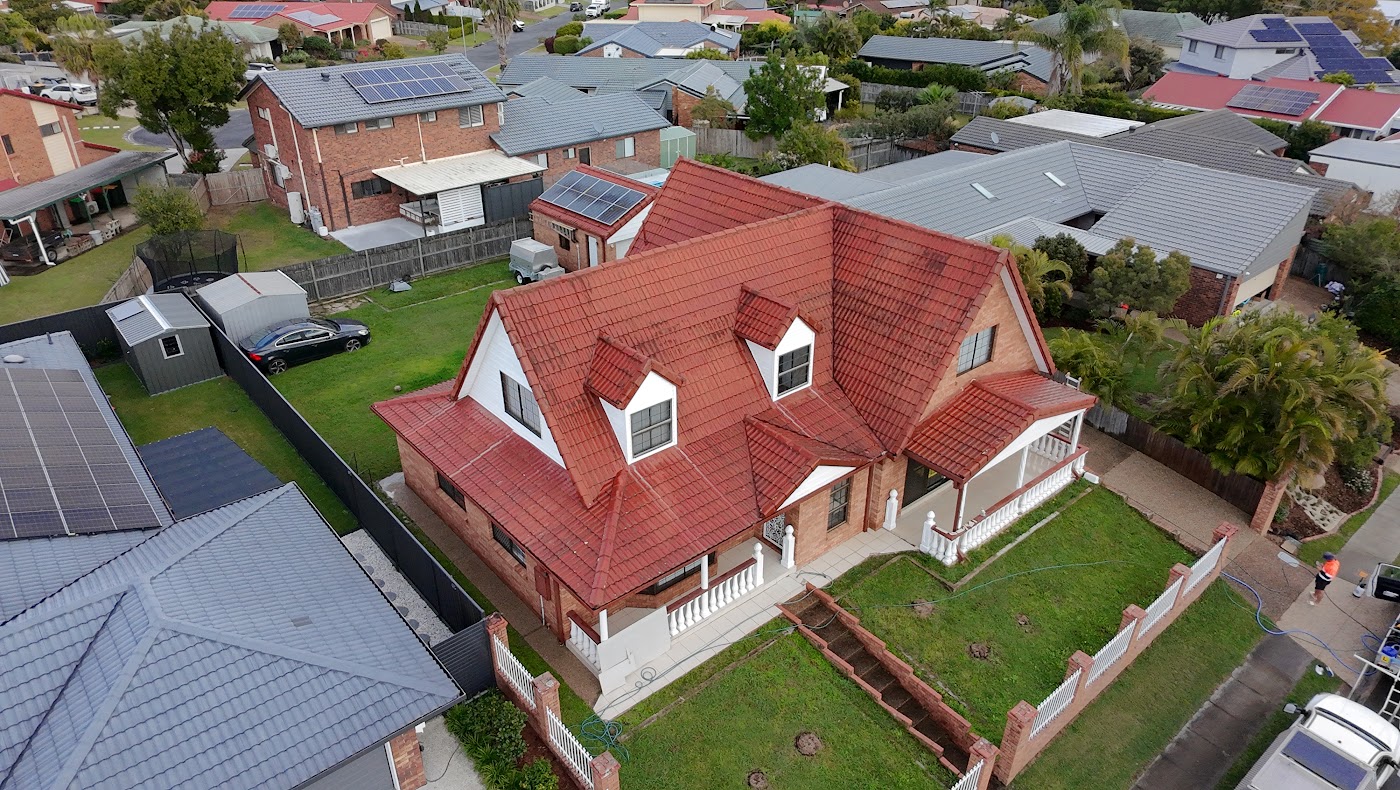
The housing itself is a mix of renovated post-war cottages, raised and built-under Queenslanders and a growing number of new builds squeezed onto old lots. The raised-and-built-under ones are the ones to watch: the gutter line ends up high, the under-croft concrete stays damp and shaded, and both need doing.
Also working nearby: Annerley, Tarragindi and Mount Gravatt.