For everything pressure would ruin. Low pressure, the right chemistry, and the patience to let it work rather than forcing the issue.
Pressure cleaning removes grime by force. Soft washing removes it chemically, then rinses at roughly garden-hose pressure. The water is doing almost nothing; the solution is doing the work.
It matters because a lot of what needs cleaning cannot survive being blasted. Paint, render, old timber, roof coatings, soft pointing, fibro, natural stone. Push high pressure at any of those and the surface comes off with the dirt — sometimes visibly, sometimes as damage that shows up a year later.
Soft washing also kills the mould and lichen rather than just knocking the tops off. That is why a soft-washed surface tends to stay clean noticeably longer than a pressure-cleaned one.
Painted render and cladding, most house washes, old terracotta and coated roofs, fibro and asbestos-era sheeting, delicate timber, fences and screening, and anything already showing signs of failing paint. It is also the method behind our terracotta roof treatment programme.
A soft wash does not always look finished the moment we drive away. On roofs especially, the chemical keeps working and the surface keeps improving over the following weeks as rain rinses away the dead growth. Pressure cleaning gives you the instant result. Soft washing gives you the surface intact.
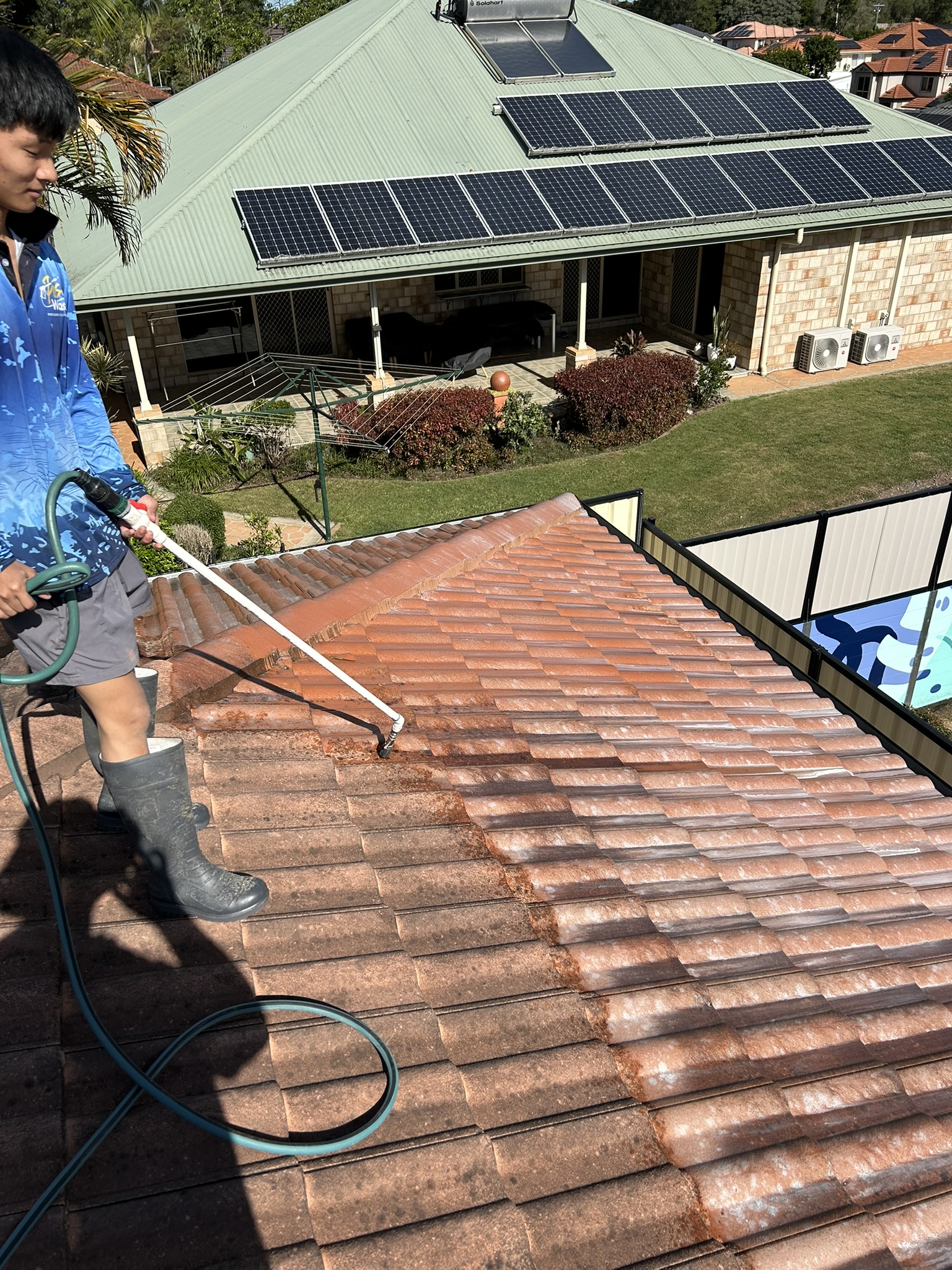
Most of the odd jobs we get asked about come down to soft washing, because the reason they are odd is that nobody wants to put pressure near them.
If you have something that needs cleaning and you are not sure whether it can take it, ask. We would rather tell you the honest answer than take the job and hope.
High pressure would have taken the render with it. This was done chemically.
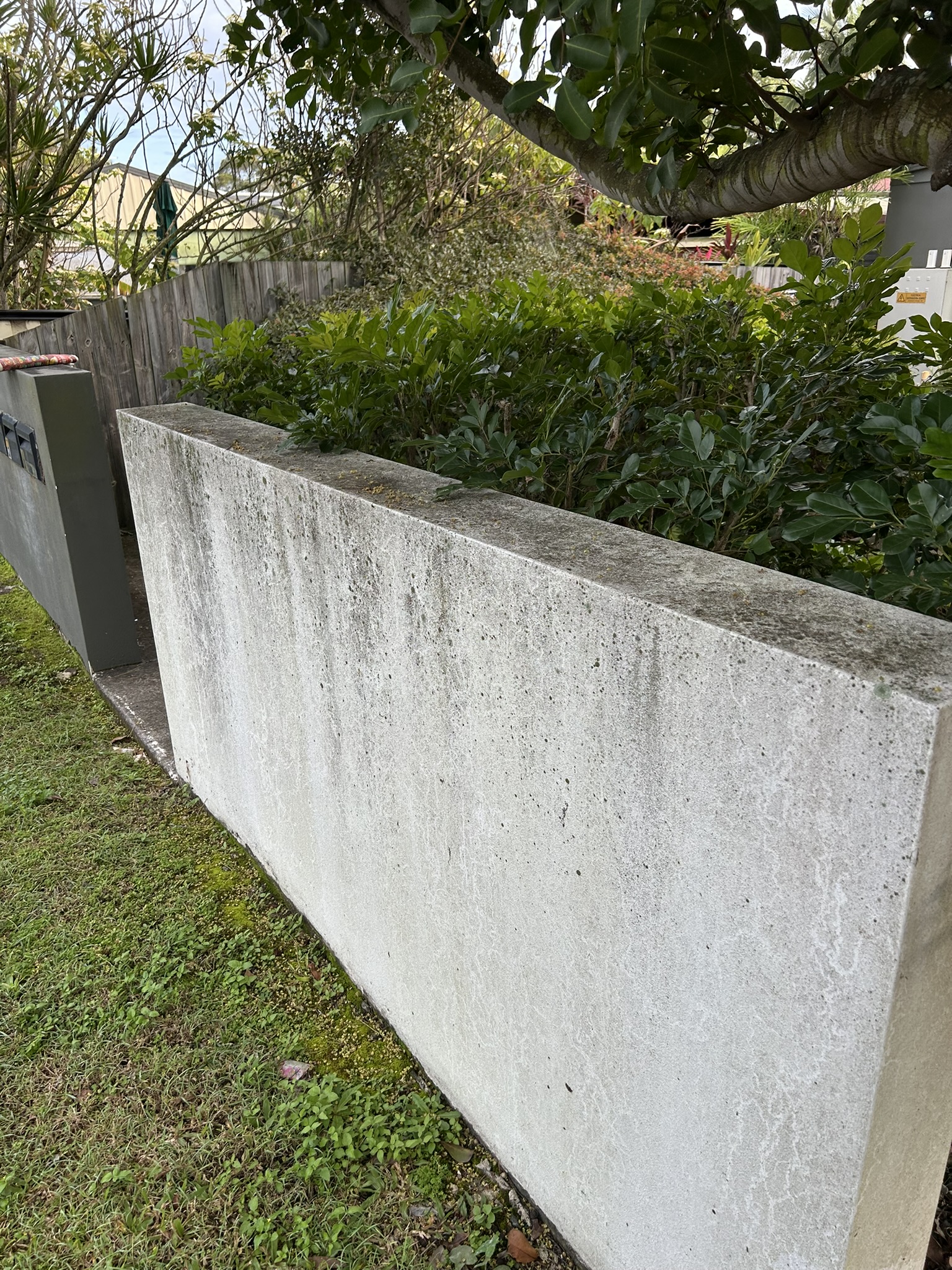
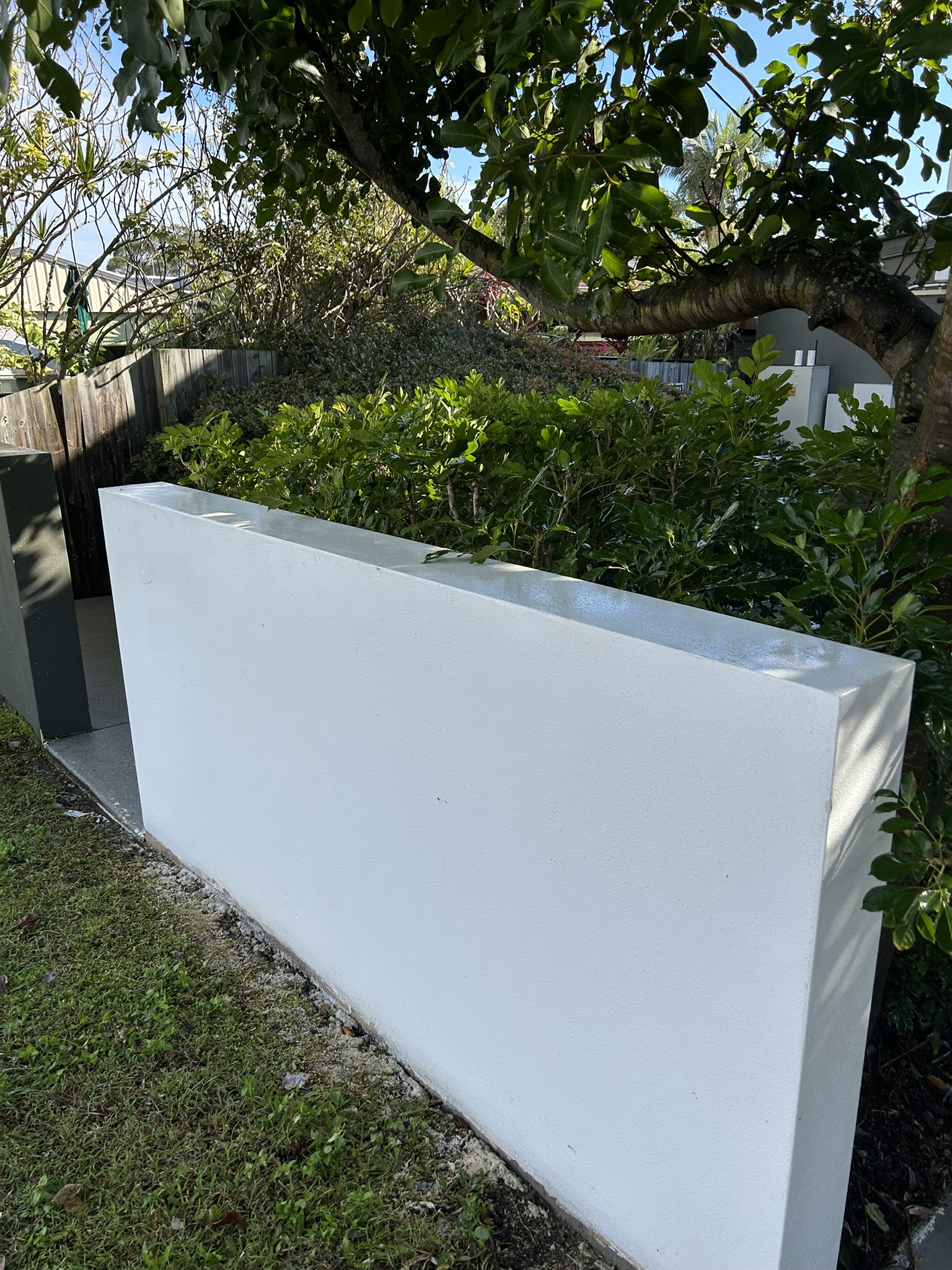
Send a photo and we will tell you. Half the value of getting someone experienced in is knowing which surfaces to leave alone.